Enhancing Data Center Design through the Lens of Operational Efficiency
Most understand the importance of clean data center architecture. Redundant power, efficient cooling, and thoughtful rack layout are all essential elements of reliability. Yet many organizations still overlook a critical layer of performance: workflow as part of the stack.
Demand for data center capacity is accelerating at roughly 15% annually. Nearly 100 gigawatts of new capacity are expected between 2026 and 2030, nearly doubling global capacity. As the industry scales at a historic pace, conversations tend to focus on infrastructure specifications. While important, this focus alone does not provide a complete picture of long-term success.
Uptime depends just as much on operational workflow as it does on physical systems. It relies on how teams function inside the facility, how clearly they communicate, how efficiently they move across the floor, and how decisively incidents are handled under pressure. Operational processes are no longer secondary considerations. They are now evaluated early in the design process because reliability is not only engineered into a building. It is embedded into the workflow itself.
Workflow as a Core Design Component
Modern data center design extends beyond walls, wires, and water loops. Today, facilities operate as holistic systems where architecture, workflow, and intelligent connectivity work together to ensure uninterrupted performance. The physical plant remains essential, but true resilience depends on how well it supports operational efficiency.
Power density and cooling strategies are vital. However, access control and physical security introduce a critical human dimension. Even the most advanced infrastructure cannot compensate for communication breakdowns, coordination gaps, or unclear accountability. When workflows fail, highly resilient facilities can still experience preventable downtime.
Where Communication Breaks Down
Physical security is a clear example as data center risk is not limited to cyber threats. There is a growing call to operationalize physical security in data centers, particularly because responsibility sits at the intersection of facilities and operations teams on one side with IT teams on the other. Vulnerabilities emerge without fully integrated processes.
In a recent interview with IT Brew, Former CISA Chief of Staff, Kiersten Todt, noted that a physical breach can be just as “catastrophic” as a cyberattack. Such breaches can result in stolen hardware, exposed sensitive information, financial loss, operational disruption, and other potential damage. Todt also reported that roughly ten data breaches can be traced back to a compromise in physical security.
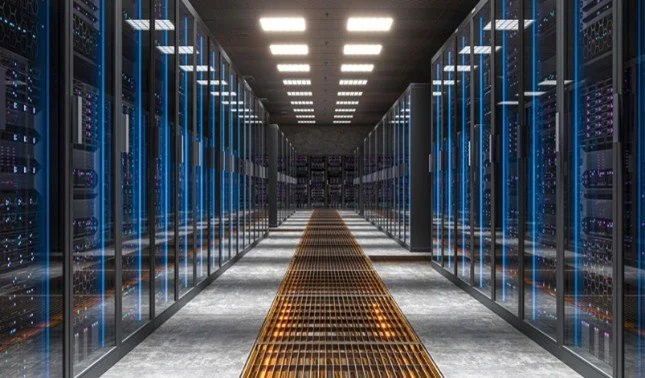
Beyond security, technicians working in dense server environments often encounter communication challenges. Rooms filled with metal racks, shielding, and infrastructure can create dead zones where radio signals struggle to propagate. Even when coverage is available, handheld radios can be impractical because they require a free hand when technicians may already be carrying tools, cabling, or server components. Radios are frequently misplaced between shifts, accountability becomes unclear, and limited battery visibility increases uncertainty.
Communication breakdowns also impact incident response. Alerts may not reach the right personnel immediately, especially in high-traffic areas where messages can be missed. Without real-time communication, response times increase simply because the correct technician was not notified quickly enough.
Recognizing Operational Gaps as IoT Opportunity
Many of these operational challenges are not failures in infrastructure. They are gaps in the communication layer of the facility. When communications lag or response protocols are fragmented, workflow becomes the weak link.
IoT solutions can help solve several workflow pain points:
Real-time communication for faster incident response
Access control integration for stronger physical security
Asset tracking and monitoring to prevent lost equipment and locate personnel during emergencies
Designing for Data Center Environments
Smart Solutions
Imagine a redesigned communication device that integrates directly into a technician’s everyday workflow. Instead of relying on a standalone radio, integrated radio modules in user devices could attach securely to clothing or tool belts, enabling hands-free, always-on connectivity through embedded mesh networking technology.

Beyond communication, integrated radios can act as multi-function operational tools, supporting capabilities such as indoor location awareness, asset identification to prevent device loss, secure credentialing for restricted zones, and automated battery monitoring. What was once a simple accessory transforms into an intelligent portion of a facility’s operational infrastructure.
A modern approach to data center communication begins with tech that naturally adapts to technician workflow. Beyond handheld radios, wearable badges, smart ID tags, tool-mounted trackers, and mobile sensor modules can all operate within the same connected ecosystem.
Design Challenges
Integrating smart solutions in industrial environments introduces a range of technical challenges:
Indoor positioning is a complex challenge. Reliable location tracking typically requires anchor points or infrastructure that can triangulate device positions inside large facilities.
Battery life is another important consideration. Devices worn continuously throughout a technician’s shift must support long runtimes without frequent charging interruptions.
Tracking range must also be carefully designed to ensure devices remain visible across large server halls and multiple floors.
Connectivity
In data center environments, leveraging connectivity solutions like mesh networking is particularly valuable. Unlike traditional point-to-point communication systems, mesh networks allow each device to act as both a transmitter and a relay. Signals can hop between devices, automatically routing around physical obstacles like metal racks or shielding.
For dense indoor environments, this architecture provides several advantages:
Expanded coverage without additional infrastructure
Improved reliability in obstructed environments
Redundant communication paths
Scalability as more devices join the network
Self-forming mesh networks also reduce deployment complexity. Devices automatically connect when powered, eliminating extensive configuration and allowing communication systems to adapt to the physical environment as it changes.
Leveraging Connected Development as a Total Solutions Provider for Operational Data Center Design
Implementing advanced communication and tracking centers in industrial environments requires a precise engineering approach. As an expert engineering design services firm, Connected Development brings decades of expertise to the growing challenges of modern data center operations. Our specialization in next-generation IoT systems and advanced connectivity positions us to help developers and organizations rethink how communication, tracking, and workflow tools integrate in physical facilities.
We understand the complexities involved in designing systems that must balance performance, power efficiency, RF coexistence, antenna design, and physical durability in dense and interference-prone facilities. By partnering with Connected Development, you gain access to a comprehensive suite of capabilities, including:
Accelerate your time to market, reduce design cycles, and ensure that operations meet real-world communication and power requirements.
Contact Connected Development to get started today!
Operational Data Center Design Frequently Asked Questions
Why is workflow considered part of the data center infrastructure?
In data centers and industrial environments, workflow directly affects uptime. Even with strong cooling, power, and redundancy, poor communication, inefficient technician movement, or unclear processes can lead to preventable downtime. Designing workflow into the facility ensures smoother, more reliable operations.
How can IoT improve data center communication and efficiency?
IoT devices enable real-time communication, indoor personnel tracking, asset monitoring, access control integration, and automated device-health reporting. These features streamline technician workflows and strengthen operational resilience.
What types of smart devices can help improve data center operations?
A modern approach to data center operations involves smart devices that are designed to integrate directly into technician workflows to improve communication, tracking, and operational efficiency. Examples include walkie-talkie belt clips with embedded mesh networking, which provide hands-free, always-on communication while supporting location awareness, access credentials, asset identification, and battery monitoring. Other connected devices include wearable badges, smart ID tags, tool-mounted trackers, mobile sensor modules, and IoT access control systems.
What technical challenges come with deploying IoT devices in data centers?
Common challenges include accurate indoor positioning, ensuring long battery life for wearable devices, maintaining tracking range across large or multi-floor facilities, and avoiding signal interference in dense server environments.
Why is mesh networking well-suited for data centers?
Mesh networking allows each device to transmit and relay signals, enabling communication paths to route around metal racks and obstacles. It provides better coverage, reliability, redundancy, and scalability than traditional point-to-point systems.
How does a self-forming mesh network reduce deployment time?
Devices automatically connect when powered, eliminating complex configuration steps. This helps teams roll out communication systems quickly across large facilities.
How does Connected Development help reduce IoT development risk?
Connected Development provides expert RF design, power profiling, PCB layout optimization, firmware tuning, testing, and certification. These capabilities prevent costly redesigns and ensure devices perform reliably in demanding environments.
How can IoT improve physical security in data centers?
IoT tools like smart badges, access-controlled zones, and real-time tracking help teams identify who is inside the facility, where they are located, and whether secure areas remain protected.
What services does Connected Development offer for data center solution development?
Connected Development is a design engineering services firm offering system design, development and prototyping, testing and certification, production support, logistics management, and failure analysis across IoT and wireless products.
How can organizations start building IoT solutions for data centers?
Organizations can partner with Connected Development to explore workflow challenges, define technical requirements, create prototypes, and design production-ready connected devices tailored for data center environments.