Accelerating Battery-Powered IoT Design with PMIC Solutions
Featuring Design Insights from Connected Development Director of Electronic Hardware Development, Tim Bodnarchuk
When designing IoT devices that run for months, or even years, every microamp counts. Efficient power usage in battery-powered designs is one of the most persistent challenges facing developers. From sensor wake cycles to radio transmissions, power budget directly impacts device performance, longevity, and reliability. As a premier engineering design services firm, Connected Development (CD) maintains a wide range of strategic global partnerships that accelerate innovation for our customers. Among them, Connected Development is a Nordic Semiconductor Design Partner. From best-in-class Bluetooth® SoCs to cutting-edge PMIC solutions and beyond, Nordic is an industry leader in ultra-low-power innovation. When paired with CD’s deep system-level design expertise, we ensure that projects not only include ideal components but integrate them in a way that achieves true low-power performance in real-world devices. What is a PMIC and Why Does it Matter?A power management integrated circuit (PMIC), or management integrated circuit PMIC, is a device responsible for regulating, distributing, and optimizing power throughout a system. In battery-powered IoT devices, PMICs help manage critical operations such as voltage regulation, energy harvesting, power sequencing, and sleep mode to maximize efficiency. Addressing the Low-Power Imperative in Battery IoT DevicesPrimary cell batteries are widely used in IoT because they are long-lasting, stable in storage, and maintenance-free. However, once deployed, recharging isn’t an option – especially in medical wearables, asset trackers, and smart sensors. System architecture and PMIC integration directly impact:
|
|||||||||
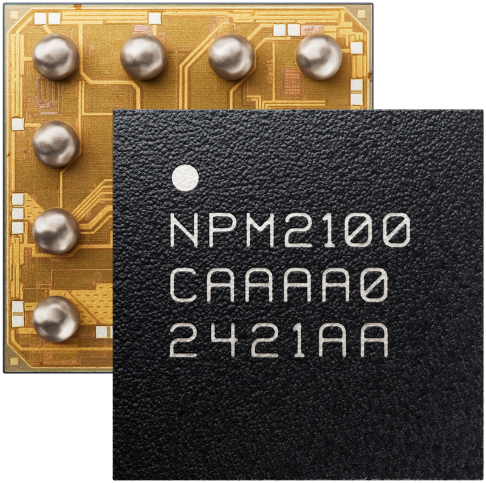
Meet the Industry’s First PMIC for Primary Cell BatteriesNordic nPM2100Nordic’s nPM2100 is the industry’s first PMIC purpose-built to support primary cell battery chemistry. For battery-powered IoT power management, this is a gam changer. With a 35nA Ship Mode, a standout feature of the nPM2100, devices can ship with the batteries pre-installed. It eliminates unnecessary discharge during storage and enabling immediate deployment. nPM2100 Key Features
nPM2100 Key Applications
|
Source: Nordic Semiconductor |
||||||||


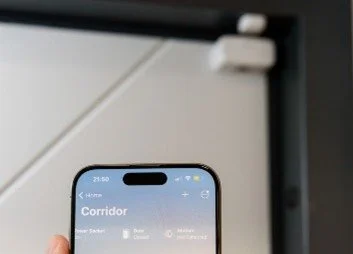
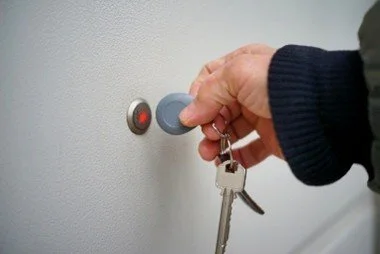
How a Simple PMIC Swap Could Double Battery Life in the FieldConsider a hypothetical, compact IoT device that relies on Bluetooth Low Energy (LE) for data transmission and operates exclusively on primary cell batteries. In designs like this, pairing a Nordic SoC solution to handle sensing, processing, and communication with the nPM2100 PMIC for power regulation can deliver industry-leading battery life. Nordic’s nRF54L Series SoCs are particularly well-suited for this type of architecture. Example Scenario:To illustrate the potential, imagine a remote monitoring device built on this platform:
Baseline Performance (Before Optimization):
Hypothetical Improvements Using Nordic SoC + nPM2100 Architecture
|
Source: Nordic Semiconductor |
Leverage Connected Development Expertise to Eliminate Design Guesswork
While helpful, designing a low-power, battery-operated IoT device isn’t just about integrating the “right” SoC or PMIC; it’s about getting every layer of the system right the first time around. RF paths, power sequencing, start-up logic, layout decisions, firmware timing, and real-world power modeling all play a role in determining whether longevity and success of a development. Solving this without a trusted design partner often results in trial-and-error engineering, delayed time to market, and devices that fall short of their promised battery life.
As an expert design engineering services firm, partnering with Connected Development means eliminating product development uncertainties. Instead of spending cycles troubleshooting why a design draws too much current during sleep, or why RF transmissions require more power than expected, CD helps teams makes informed decisions early. With a team of over 60 design professionals, we understand the most common failure points battery-powered IoT devices.
By partnering with Connected Development, you gain access to:
Deep RF and Wireless Expertise: CD can design and tune RF paths, optimize antenna placement, and verify performance in our in-house anechoic chamber. This ensures devices achieve expected range and power efficiency without hidden coupling issues or excessive transmit times.
System-Level Power Profiling and Modeling: We measure real current consumption across active, idle, and deep sleep states, rather than relying on estimates or evaluation board data. This allows teams to validate true battery life before committing to production.
Power-Optimized PCB Layout and Component Selection: Our engineers carefully route power domains, minimize leakage and switching losses, select ideal power components, and implement proper decoupling strategies to prevent layout-induced inefficiencies that silently drain batteries.
Clean Power Sequencing and Dynamic Power Gating: We ensure devices wake, sleep, and shutdown correctly without wasted current, brownouts, or data loss. These capabilities are crucial for systems integrating PMICs like the nPM2100.
Firmware Optimization: This includes duty cycling, peripheral shutoff strategies, event-driven wake-ups, and radio scheduling aligned with sensor and connectivity standards.
Supply Chain and Logistics Management: We help our customers ensure that components are available through our broad ecosystem of design partnerships and membership in the Exponential Technology Group (XTG). As a proud member of XTG, CD is part of an ecosystem that includes specialty semiconductor distributors. In addition to Mouser Electronics and TTI IP&E, XTG is part of the TTI Family of Specialists (FOS), providing purchasing communities and manufacturers a well-funded, well-known global distributor backed by the strength of TTI, Inc., a Berkshire Hathaway Company.
Working with CD gives a new meaning to the product development process through a faster path to market, fewer redesigns, and confidence that devices will meet real-world power requirements (not just datasheet projections). Instead of spending months tuning power settings or fixing mistakes, you can focus on core values while CD does the engineering heavy lifting.